
Visit the former home and studio of sculptor Auguste Rodin, now a museum showcasing his most famous works, including 'The Thinker' and 'The Kiss,' set in a beautiful sculpture garden.
Visit Info & Tips
Nestled in the heart of Paris, the Musée Rodin is a captivating sanctuary dedicated to the life and work of Auguste Rodin, one of the most influential sculptors of the modern era. Housed in the magnificent Hôtel Biron, an 18th-century rococo mansion where Rodin himself lived and worked towards the end of his life, the museum offers a unique and intimate insight into the artist's creative genius. The mansion itself is a work of art, with its ornate interiors providing a grand backdrop to Rodin's powerful sculptures. Beyond the opulent rooms of the Hôtel Biron, visitors are invited to explore the museum's extensive sculpture garden, a serene oasis spanning three hectares. This outdoor gallery is perhaps as famous as the indoor exhibits, presenting some of Rodin's most iconic masterpieces amidst lush greenery and fragrant rose bushes. Here, monumental works like 'The Thinker' and 'The Gates of Hell' find their natural home, allowing for a contemplative viewing experience that highlights Rodin's profound connection to nature and the human form. The interplay of light and shadow on the bronze and marble surfaces changes with the day, offering new perspectives with each visit. The Musée Rodin's collection extends beyond Rodin's celebrated sculptures to include drawings, prints, paintings, and even his personal art collection, which features works by Vincent van Gogh and Claude Monet. This comprehensive display contextualizes Rodin's artistic journey, showcasing his inspirations, processes, and the evolution of his revolutionary style. The museum is not merely a showcase of finished pieces; it also provides a glimpse into Rodin's workshop, with plaster studies, models, and photographic archives revealing the painstaking effort and innovative techniques behind his creations. A visit to the Musée Rodin is an immersive journey into the mind of a master, making it an essential destination for art lovers and anyone exploring the cultural riches of Paris.




Compare & Save
-
Musee Rodin Skip The LineTickets
 TiqetsFrom€0
 -
Musee Rodin Private Guided TourToursTiqetsFrom€0
-
Paris Top Three MuseumsTicketsTiqetsFrom€0
-
Musée Rodin: Semi-Private Guided Tour in EnglishToursTiqetsFrom€151
-
Combo: Rodin Museum + 1-Hour Seine River Sightseeing CruiseBundles
 HeadOutFrom€33
Practical Info
About Musée Rodin
Opened in 1919, the Musée Rodin occupies the Hôtel Biron, an exquisite rocaille mansion in the 7th arrondissement. This site is unique as Auguste Rodin (1840–1917) used the villa as his workshop and residence in his final years. He donated his entire collection—including plasters, bronzes, and his personal art collection—to the French State on the condition that the building be preserved as a museum dedicated to his work. The interior of the mansion features meticulously restored rooms where sunlight illuminates iconic marbles and early portrait busts. The curation allows visitors to trace Rodin's evolution from traditional craftsmanship to the radical, fragmented aesthetic that paved the way for modern sculpture. Notable works inside include the sensual 'The Kiss' and the expressive 'Portraits of Honoré de Balzac.' The three-hectare sculpture garden is equally significant, designed to harmonize art with nature. Large-scale bronzes are carefully positioned among trimmed hedges and rose bushes. Strolling through the 'Garden of Springs' or the 'Garden of Orpheus,' visitors encounter monumental works that take on different moods depending on the Parisian light. Beyond Rodin's own creations, the museum displays his personal collection of antiquities and paintings, including works by Vincent van Gogh and Edvard Munch. This offers a rare glimpse into the influences that shaped the master's vision and his surrounding creative atmosphere. Today, the Musée Rodin remains one of the most beloved cultural institutions in Paris, offering a peaceful retreat from the city's bustle. Whether you are exploring the intimate sketches in the temporary exhibition wing or reflecting in front of the 'Gates of Hell,' the museum provides a profound encounter with the raw emotion of the human form.
What to See
Musée Rodin
The Thinker
The Gates of Hell
The Kiss
Hôtel Biron interiors
Sculpture Garden
Temporary Exhibitions
FAQ
Exhibitions
1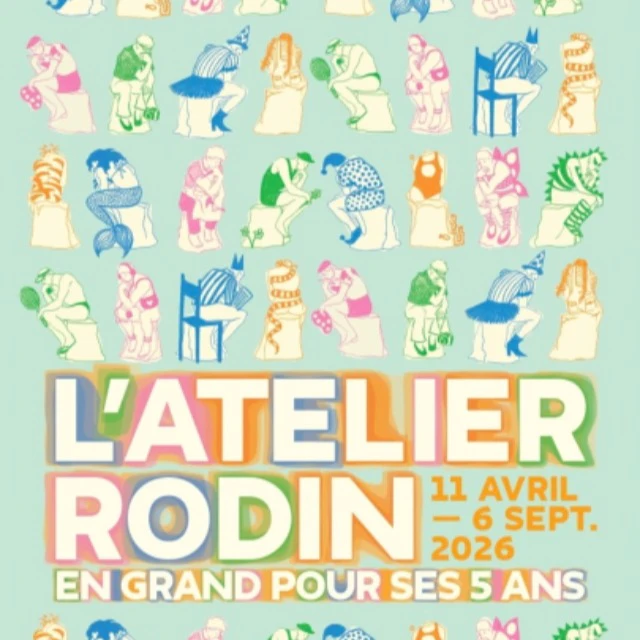
L'atelier Rodin
Musée RodinThe content discusses the use of cookies on a website to enhance user experience through personalization and functional features. Necessary cookies are highlighted for basic site functionalities, while functional, analytical, and advertisement cookies help in enhancing user interaction, tracking analytics, and showing personalized ads respectively. The page also includes details about the Musée Rodin in Paris, featuring information on its opening hours, events like 'The Rodin Workshop' from April to September 2026, ticket options, and general reviews praising the environment and art collection.
11 aprile — 7 settembre 2026
Exhibitions FAQ
What exhibitions are on at Musée Rodin?
1 exhibition currently scheduled at Musée Rodin: L'atelier Rodin.
Do I need to book in advance?
Yes — temporary exhibitions at Musée Rodin sell out quickly, especially on weekends. Booking a timed-entry ticket online is strongly recommended.
History
<p>Auguste Rodin's journey to establishing his own museum is as remarkable as his artistic career. Born in 1840, Rodin faced initial rejection from the École des Beaux-Arts, but his relentless dedication to studying the human form led him to become one of the most celebrated sculptors of his time. Towards the end of his life, specifically from 1908, Rodin took up residence in the Hôtel Biron, using it as his studio and showroom. The dilapidated mansion, originally built for financier Abraham Peyrenc de Moras in the 1720s, had served various purposes before Rodin's arrival, including a convent and a school for young women.</p><p>Facing the threat of the property being sold and his works potentially dispersed, Rodin had a groundbreaking idea: he would donate his entire collection to the French state, including all his sculptures, drawings, photographs, and the rights to reproduce them, on the condition that the Hôtel Biron be transformed into a museum dedicated to his work. This visionary proposal was a testament to his desire to preserve his artistic legacy and make it accessible to the public.</p><p>The French state accepted Rodin's generous offer. The official agreement was signed in 1916, just a year before his death. Following his passing in November 1917, the museum was meticulously prepared. <strong>Key date: The Musée Rodin officially opened its doors to the public in 1919</strong>, two years after the artist's death. This marked the culmination of Rodin's dream and ensured that his masterpieces, including 'The Thinker,' 'The Kiss,' and 'The Gates of Hell,' would remain assembled and displayed in the very place where many of them were conceived.</p><p>An interesting anecdote tells of Rodin acquiring many of the antique sculptures displayed in the garden. He believed in the importance of studying classical forms alongside modern art, and these pieces served as constant inspiration. The museum continues to embody Rodin's spirit, showcasing not only his finished works but also the creative process, making it a living testament to his enduring influence on art.</p>
Save more with a Paris Pass that includes Musée Rodin
Bundle multiple top attractions, skip lines and pay less per ticket.
- Multi-attraction access
- Skip-the-line entry
- Better value than single tickets
- Free cancellation on most passes
Prices and inclusions verified with our partners Tiqets and Headout.
You may also like
Other attractions near Musée Rodin


🎟️ Book tickets for Musée Rodin
Book now ↗Book now ↗