
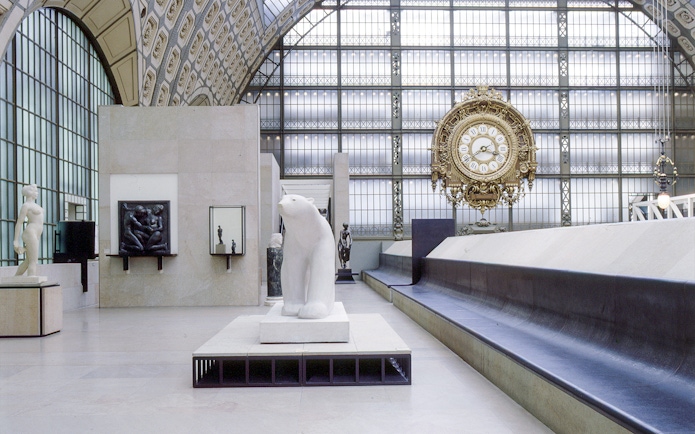
Housed in a grand Beaux-Arts railway station on the Left Bank of the Seine, the Musée d'Orsay holds the world's greatest collection of Impressionist and Post-Impressionist masterpieces. Visitors come to admire works by Monet, Renoir, Degas, and Van Gogh beneath the iconic golden station clocks overlooking Paris.
Visit Info & Tips
Orsay sells out daily, so it is essential to book a Dedicated Entrance ticket in advance to secure a timed slot. For a deeper dive into art history, choose a Small Group Tour or a Skip-the-Line Semi-Private Guided Tour to uncover the stories behind Monet's lilies and Van Gogh's self-portraits. Impressionist lovers can save 12% by bundling with the Orangerie Museum or choose the Paris Top 3 Museums pass for maximum value. Consider pairing your visit with a Seine River cruise—the dock is just steps away—or upgrade to the Paris-Seine Pass for unlimited transport and attraction access.







Compare & Save
Informazioni pratiche
About Musée d'Orsay
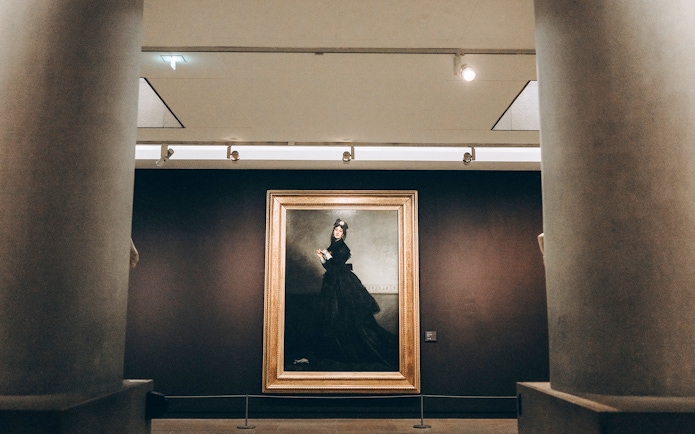
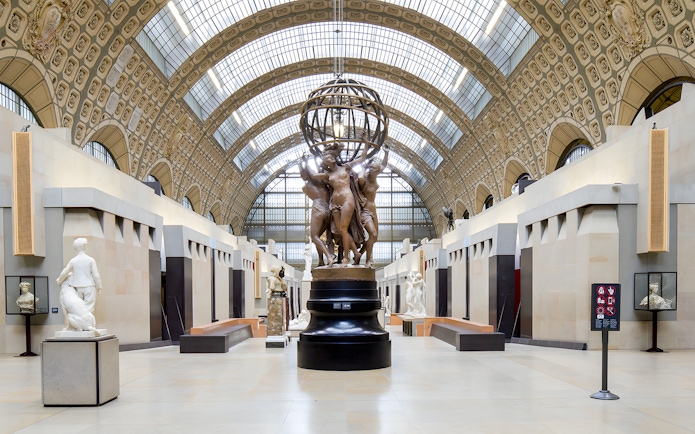
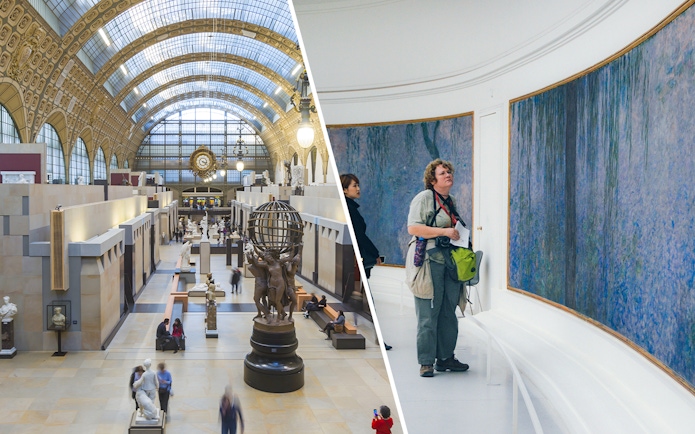
Originally built as the Gare d'Orsay railway station for the 1900 Universal Exposition, the Musée d'Orsay is a Beaux-Arts masterpiece by architect Victor Laloux. Its soaring 138-metre nave, coffered ceilings, and giant ornamental clocks remain as testament to its industrial heritage, providing a dramatic backdrop for the transition into 19th-century art. After serving rail passengers until 1939, the building narrowly escaped demolition before it was transformed into a museum in 1986. It was designed to bridge the gap between the classical collections of the Louvre and the contemporary art of the Centre Pompidou, focusing on the highly productive period between 1848 and 1914. Today, the museum is synonymous with the Impressionist movement. Its galleries house world-renowned works including Manet's 'Olympia', Renoir's 'Bal du moulin de la Galette', and multiple iterations of Monet's 'Rouen Cathedral' and 'Water Lilies'. The fifth floor, in particular, offers a chronological journey through the radical brushstrokes that changed art forever. Beyond paintings, the museum displays an extensive collection of sculpture, decorative arts, and photography. Notable works by Rodin and Claudel are interspersed with Art Nouveau furniture, showcasing the total artistic shift of the Belle Époque. The massive station clock on the top floor also serves as a famous viewpoint, offering a unique silhouette of the Sacré-Cœur across the city.
What to See
Musée d'Orsay
The Impressionist Gallery
Van Gogh’s Masterpieces
The Giant Station Clocks
The Great Nave
Renoir's 'Bal du moulin de la Galette'
FAQ
Mostre
4
Youssef Nabil. De rêver encore
Musée d'OrsayThe web page discusses cookie usage on the site, emphasizing the importance of cookies for personalization, functionality, and analytics. Users can manage their cookie preferences in the settings. The necessary cookies enable basic site operations and security, while functional cookies enhance user experience. Analytical cookies provide insights into visitor engagement and advertising cookies tailor ads based on user behavior. Following this section, there is a detailed list of specific cookies used, their durations, and descriptions of their functions. The page then shifts to information about an exhibition titled "Youssef Nabil: Still Dreaming" at the Musée d'Orsay, showcasing Nabil's artistry and photos. The summary includes details on the museum's location, opening hours, and ongoing exhibitions.
19 maggio — 14 settembre 2026

Parcours « 100 œuvres qui racontent le travail » : travailler au XIXe siècle
Musée d'OrsayThe webpage discusses the use of cookies on a site to enhance user experience and provide personalized content. Users are informed about the categories of cookies, including necessary, functional, analytical, advertisement, and uncategorized cookies, along with specific examples and their durations. The site also includes an exhibition at the Musée d'Orsay titled '100 Works That Tell the Story of Work,' focusing on 19th-century masterpieces, alongside details about upcoming events, reviews, and general visitor information for the museum.
31 marzo — 3 agosto 2026

Renoir Dessinateur
Musée d'OrsayThe content discusses cookie usage on a website, highlighting the personalization features they provide. It categorizes cookies into Necessary, Functional, Analytics, Advertisement, and Uncategorized. Each category includes specific cookies, their durations, and descriptions of their functions. Additionally, it mentions an exhibition at the Musée d'Orsay featuring works by Renoir, illustrating the connection between his paintings and drawings. The museum is noted for its significant collection of Impressionist and Post-Impressionist art. Furthermore, practical details like opening hours and ticket information are shared, emphasizing the importance of advanced booking to ensure a smooth visitor experience.
17 marzo — 6 luglio 2026

Renoir et l'amour : Une modernité joyeuse (1865-1885)
Musée d'OrsayThe content provides details on cookie usage for personalized web experiences, informing users about managing their preferences through cookie settings. Necessary cookies ensure basic functionalities like security and accessibility, while functional, analytical, and advertisement cookies support enhanced user interaction and targeted advertising. It also highlights a specific exhibition, "Renoir and Love: a Joyful Modernity: 1865-1885," at the Musée d'Orsay, showcasing Renoir's works and ongoing museum operations, including details about visiting hours and location.
17 marzo — 20 luglio 2026
Domande frequenti sulle mostre
Quali mostre sono in corso a Musée d'Orsay?
4 mostre attualmente in programma a Musée d'Orsay: Youssef Nabil. De rêver encore; Parcours « 100 œuvres qui racontent le travail » : travailler au XIXe siècle; Renoir Dessinateur; Renoir et l'amour : Une modernité joyeuse (1865-1885).
È necessario prenotare in anticipo?
Sì — le mostre temporanee a Musée d'Orsay si esauriscono rapidamente, soprattutto nei weekend. Si consiglia di prenotare un biglietto con ingresso a orario online.
La Storia
The history of the Musée d'Orsay is as compelling as the art it houses. Originally inaugurated as the Gare d'Orsay for the 1900 Exposition Universelle, the building was a triumph of industrial architecture. Designed by Victor Laloux, it featured an ornate stone facade that concealed a modern iron and glass structure, serving as the hub for the southwestern French railroad network. However, as train technology evolved and platforms became too short for modern electric trains by 1939, the station’s utility declined. It narrowly escaped demolition in the 1970s when the French government decided to convert it into a museum to bridge the chronological gap between the Louvre and the Centre Pompidou. This transformation, led by architect Gae Aulenti and completed in 1986, preserved the station's cavernous volume and natural lighting. The result is a venue where the industrial grandeur of the Belle Époque meets the radical brushstrokes of the Impressionists. Today, it stands as the final resting place for world-defining works such as Manet's 'Olympia' and Renoir's 'Bal du moulin de la Galette', positioned within a space that reflects the very era of progress and transformation these artists sought to capture on canvas.
Risparmia con un Paris Pass che include Musée d'Orsay
Combina più attrazioni top, salta la coda e paga meno a biglietto.
- Accesso a più attrazioni
- Salta la coda
- Più conveniente dei biglietti singoli
- Cancellazione gratuita su molti pass
Prezzi e inclusioni verificati con i nostri partner Tiqets e Headout.
Potrebbe interessarti
Altre attrazioni vicino a Musée d'Orsay


🎟️ Prenota biglietti per Musée d'Orsay
PRENOTA ORA ↗PRENOTA ORA ↗